Who Is Billy Bulger
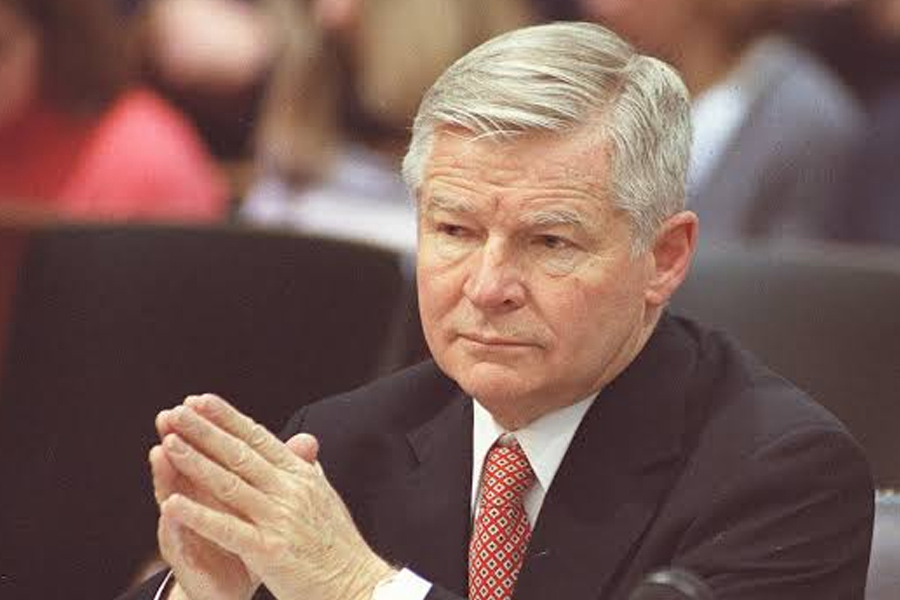
William Michael “Billy” Bulger, born February 2, 1934, is a retired American Democratic politician, lawyer, educator, and longtime Massachusetts public figure. To understand Billy Bulger, I think it is necessary to look beyond the political titles. His life sits at the intersection of South Boston neighborhood culture, Irish American family traditions, Massachusetts politics, education, and one of the most notorious criminal stories in modern Boston history.
Bulger served in the Massachusetts House of Representatives from 1960 to 1971 and then represented the First Suffolk District in the Massachusetts Senate. His political rise reached its peak in 1978, when he became President of the Massachusetts Senate. He remained in that position until 1996, giving him the longest tenure as Senate president in Massachusetts history.
Later, he became president of the University of Massachusetts system, serving from 1996 until 2003. His career included work on education, social programs, environmental policy, libraries, and public funding. At the same time, his family name became inseparable from that of his older brother, James “Whitey” Bulger, the notorious organized crime leader.
That contrast is central to Billy Bulger’s story. One brother built a career through law, politics, and education. The other became one of America’s most wanted fugitives.
Billy Bulger Basic Information
| Detail | Information |
|---|---|
| Full name | William Michael Bulger |
| Common name | Billy Bulger |
| Born | February 2, 1934 |
| Birthplace | Dorchester, Massachusetts, United States |
| Profession | Politician, lawyer, educator |
| Political party | Democratic |
| Massachusetts House | 1960 to 1971 |
| Massachusetts Senate | 1971 to 1996 |
| Senate President | 1978 to 1996 |
| University of Massachusetts president | 1996 to 2003 |
| Spouse | Mary Foley Bulger |
| Children | 9 |
| Grandchildren | 33 |
| Brother | James “Whitey” Bulger |
| Education | Boston College and Boston College Law School |
Childhood in South Boston
Billy Bulger was born into a large Irish American Catholic household during the Great Depression. James Joseph Bulger Sr., from Harbor Grace, Newfoundland, was a laborer and occasional longshoreman or clerk. After a catastrophic industrial accident, he lost most of one arm and struggled to find work.
His mother, Jane Veronica “Jean” McCarthy Bulger, was Irish. She was social, resilient, and interested in raising her children, according to family accounts.
The family relocated into South Boston’s Old Harbor Village public housing complex, eventually renamed the Mary Ellen McCormack Housing Development, in 1938, when Billy was four. This neighborhood defined him throughout his life.
Six children lived with the Bulgers. Billy was third.
Education and Catholic values were crucial to the poor household. Billy was an altar boy and a serious student. Considering his surroundings, his scholastic interests were striking. He was nicknamed “The Beam” for studying late at nite and focusing on English literature and classics.
Education and the Road to Politics
Billy graduated from Boston College High School in 1952 and continued to Boston College. His education was interrupted by military service in the United States Army from 1953 to 1955.
After his military service, he returned to college with assistance from the G.I. Bill. He eventually completed his bachelor’s education and earned a law degree from Boston College Law School in 1961.
His connection with Boston College became unusually deep. Because he attended Boston College High School, Boston College, and Boston College Law School, he became known as a “Triple Eagle.”
By the early 1960s, law and politics offered him a path that would take him far beyond the South Boston housing project where he had grown up.
A Powerful Career in Massachusetts Politics
Bulger entered the Massachusetts House of Representatives in 1960. He represented South Boston and built a political organization that depended heavily on personal relationships, neighborhood loyalty, and his ability to remember people and local concerns.
In 1970, he moved to the Massachusetts Senate. His rise through the chamber was steady. He became a legislative leader and, in 1978, was elected President of the Senate.
For the next 18 years, the Massachusetts Senate was closely associated with his leadership.
Bulger was known for controlling the legislative agenda while maintaining a relatively low public profile. He was not generally a politician who sought constant attention from television cameras. His influence was more like an old political machine: personal, organized, patient, and deeply rooted in relationships.
During his Senate presidency, he became associated with a wide range of policies and programs. These included child abuse reporting requirements, environmental initiatives, Boston Harbor cleanup efforts, public library funding, childhood nutrition programs, fuel assistance, education reform, charter schools, school choice, and welfare reform.
He was also a prominent opponent of court ordered school desegregation busing in Massachusetts during the 1970s. His position placed him within one of the most contentious political conflicts in Boston’s modern history.
His political style attracted both admiration and criticism. Supporters pointed to his legislative achievements and his commitment to South Boston. Critics argued that his power reflected the traditional patronage politics of Massachusetts.
Billy Bulger and the University of Massachusetts
In the mid 1990s, Bulger moved from the State House to higher education. He was appointed president of the University of Massachusetts system in 1995 and formally served as president beginning in 1996.
The position placed him in charge of a growing public university system with campuses across Massachusetts.
As president, Bulger emphasized access, affordability, student recruitment, institutional support, and the development of the university system. He also promoted the idea that a strong public university could expand opportunity for Massachusetts residents.
The William M. Bulger Presidential Scholarship was later established in recognition of his contributions.
His university presidency, however, eventually became entangled with the same family issue that had followed him throughout his political career.
The Family Connection to Whitey Bulger
Billy Bulger’s older brother James Joseph “Whitey” Bulger was born in 1929. He eventually became leader of the Winter Hill Gang and was associated with organized crime, extortion, drug trafficking, and murder.
Whitey fled Boston in 1994 or early 1995 after learning that federal charges were approaching. He remained a fugitive for more than 16 years before being captured in Santa Monica, California, in June 2011.
Billy’s relationship with his brother became one of the defining controversies of his public life.
Billy acknowledged receiving a telephone call from Whitey after his disappearance. He did not immediately report the call to authorities. During later testimony, he maintained that he loved his brother but did not know where he was hiding and did not possess detailed knowledge of his criminal activities.
His position created a difficult moral and political question that followed him for years. Critics viewed his family loyalty and limited cooperation as an obstacle to law enforcement. Billy, meanwhile, presented his actions as the complicated result of family loyalty and limited knowledge.
He was never charged with participating in Whitey’s crimes.
The Bulger Family
Billy’s family history goes beyond Whitey’s fame.
South Boston and Quincy resident Jean Marie Bulger Holland, his older sister, died in 2019. She married Joseph D. Toomey Jr. and Francis J. Holland and had children and grandkids.
The South Boston family included his sister Carol Ann Bulger McCarthy.
His younger brother John “Jackie” P. Bulger was a Boston Juvenile Court clerk magistrate. Jackie later made controversial claims about his Whitey contacts. Perjury and obstruction of justice cost him his state pension in 2003. On August 12, 2026, Jackie died at home in South Boston.
Sheila Bulger McKeon, another sister, lived in Hull, Massachusetts, and survived.
Politics, law, public service, criminal justice, Catholic family life, and South Boston identity weave together in the family’s story.
Marriage to Mary Foley Bulger
Billy married Mary Foley in July 1960. Their relationship began when they were young, and Billy took Mary to her senior prom at Gate of Heaven High School.
Mary was the daughter of Irish immigrants from County Galway, Martin and Sarah Foley. She remained closely connected to South Boston throughout her life.
Together, Billy and Mary raised nine children:
| Child | Family name |
|---|---|
| William Jr. | Bulger |
| James | Bulger |
| Sarah | Piscatelli |
| Patrick | Bulger |
| Mary | Bulger Hurley |
| Daniel | Bulger |
| Kathleen | Webb |
| Christopher | Bulger |
| Brendan | Bulger |
The couple eventually had 33 grandchildren.
Mary was remembered within the family as a devoted mother and grandmother. She was also known for baking and gardening and for bringing relatives together around the family home.
She died on June 7, 2020, at the age of 84. Her death during the COVID 19 pandemic meant that the family funeral was held under unusual restrictions.
Billy Bulger’s Children and the Whitey Legacy
Billy’s nine children grew up with a family name that carried two very different meanings.
Their father was a prominent Massachusetts political leader. Their uncle was a convicted organized crime figure who spent more than a decade as a fugitive.
Some members of the younger generation have discussed this complicated inheritance publicly, including in the 2021 documentary My Name Is Bulger. Family interviews and home movies provided a more personal picture of the Bulger household and the relationships that existed behind the headlines.
The children’s experiences also illustrate how difficult it can be for a family to separate private affection from public history. Whitey could simultaneously be a beloved uncle within a family and a convicted criminal in the eyes of the law.
Later Years and Public Life
After leaving the University of Massachusetts presidency in 2003, Billy largely stepped away from the political spotlight.
He later taught political science at Boston College and Suffolk University and remained connected to several Massachusetts cultural and educational institutions. His board and civic affiliations included organizations such as the Boston Public Library, Boston Symphony Orchestra, Massachusetts General Hospital, Museum of Fine Arts, and McLean Hospital.
He also wrote about his political career. His memoir, While the Music Lasts: My Life in Politics, appeared in 1996. He also wrote about former Boston mayor James Michael Curley.
In his later years, Billy became an increasingly private figure. His public appearances became rare, while media references often centered on Whitey’s history, the Bulger family’s deaths, or questions surrounding Billy’s Massachusetts pension.
Billy Bulger’s Pension and Financial Position
Billy’s retirement finances have attracted considerable public attention because his Massachusetts state pension is unusually large.
His pension has been associated primarily with his service as University of Massachusetts president, together with his earlier public service. Figures reported during the 2010s were generally around $199,000 to $201,000 per year, while later commentary placed the annual amount considerably higher after subsequent adjustments.
The pension has generated debate about public compensation and the benefits available to long serving Massachusetts officials.
At the same time, pension figures should not be confused with a confirmed estimate of Billy Bulger’s total personal wealth. His public career, property holdings, family circumstances, and retirement income are separate questions.
Billy Bulger in His Nineties
Billy Bulger was 90 in 2026 and had withdrawn from public life.
He stayed in South Boston with family after Mary’s death, according to local reports. His world has changed since he commanded the Massachusetts Senate.
However, the family name remains popular. Whitey’s criminal background, Jackie’s 2026 death, pension negotiations, and Massachusetts political retrospectives push Billy Bulger back into the spotlight.
His odd contrast between public achievement and private allegiance stands out in his biography. Billy Bulger was the longest-serving Massachusetts Senate president, managed the state’s public university system, and was closely connected to his hometown of South Boston. At the same time, his identity was forever linked to an older brother whose life was very different.
Frequently Asked Questions About Billy Bulger
Who is Billy Bulger?
Billy Bulger is a retired Massachusetts Democratic politician, lawyer, and educator. He served as President of the Massachusetts Senate from 1978 to 1996 and later became president of the University of Massachusetts system.
How old is Billy Bulger?
Billy Bulger was born on February 2, 1934. He reached the age of 92 in February 2026.
Is Billy Bulger related to Whitey Bulger?
Yes. Billy Bulger was the younger brother of James “Whitey” Bulger, the former Winter Hill Gang leader and convicted organized crime figure.
How long was Billy Bulger president of the Massachusetts Senate?
He served as Senate president from 1978 through 1996, a period of 18 years. It remains the longest tenure in the history of the Massachusetts Senate.
Who was Billy Bulger’s wife?
Billy Bulger was married to Mary Foley Bulger from July 1960 until her death on June 7, 2020. They had nine children and 33 grandchildren.
How many children did Billy Bulger have?
Billy and Mary Bulger had nine children: William Jr., James, Sarah, Patrick, Mary, Daniel, Kathleen, Christopher, and Brendan.
Did Billy Bulger know where Whitey Bulger was hiding?
Billy said that he did not know Whitey’s whereabouts during his years as a fugitive. He acknowledged receiving a telephone call from Whitey after his disappearance but maintained that he did not have detailed knowledge of his brother’s criminal activities or location.
Was Billy Bulger charged with Whitey Bulger’s crimes?
No. Billy Bulger was not criminally charged in connection with his brother’s organized crime activities.
What happened to Whitey Bulger?
Whitey Bulger was captured in California in June 2011 after more than 16 years as a fugitive. He was convicted of racketeering and other offenses, including participation in 11 murders, and received a life sentence. He was killed in federal prison on October 30, 2018.
What happened to Billy Bulger’s younger brother Jackie?
John “Jackie” P. Bulger was a former Boston Juvenile Court clerk magistrate. He was convicted in 2003 of perjury and obstruction of justice related to statements about contacts with Whitey Bulger. He died at his home in South Boston on August 12, 2026.
Where does Billy Bulger live?
Billy Bulger has maintained a private life in South Boston in his later years. His public appearances have become increasingly rare since his retirement from the University of Massachusetts system.
Available next action: Create a downloadable DOCX file here in this chat containing the editable prose above