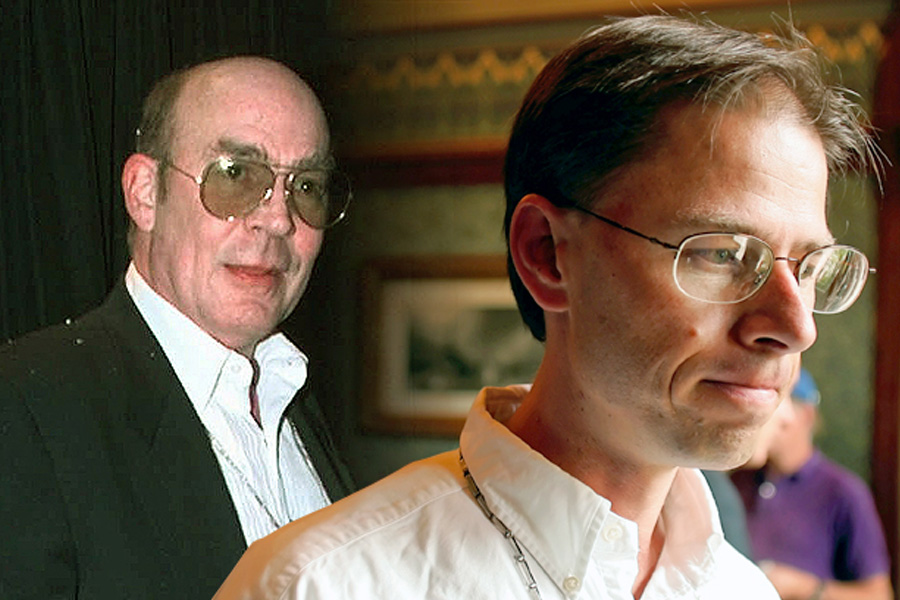
Who Is Juan Fitzgerald Thompson
Juan Fitzgerald Thompson was born on March 23, 1964, and is the only child of legendary gonzo journalist Hunter S. Thompson and his first wife, Sandra Dawn Conklin, better known during the marriage as Sandy Thompson and later as Sondi Wright. Unlike his famous father, Juan has spent much of his life away from celebrity culture, choosing a comparatively quiet career, a stable family life, and a private existence.
For me, Juan’s story is especially interesting because it is not simply the story of a famous writer’s son. It is the story of someone who grew up inside an extraordinary household and then deliberately chose a different path. Hunter S. Thompson built a public identity around excess, confrontation, drugs, guns, politics, motorcycles, and gonzo journalism. Juan, by contrast, became a healthcare IT professional, husband, father, and author who approached his father’s legacy with a mixture of affection, frustration, honesty, and restraint.
His 2016 memoir, Stories I Tell Myself: Growing Up with Hunter S. Thompson, provides the clearest portrait of that complicated relationship. Juan’s childhood was filled with experiences that could have belonged to a strange American novel, yet he eventually created a life that was considerably more conventional than the world surrounding his father.
| Basic Information | Details |
|---|---|
| Full name | Juan Fitzgerald Thompson |
| Date of birth | March 23, 1964 |
| Birthplace | California, United States |
| Father | Hunter S. Thompson |
| Mother | Sandra Dawn Conklin, later Sondi Wright |
| Spouse | Jennifer |
| Son | Will Thompson |
| Education | Concord Academy and Tufts University |
| Career | Healthcare IT project and program management |
| Major book | Stories I Tell Myself |
| Publication year | 2016 |
| Known for | Being Hunter S. Thompson’s only child and chronicling their relationship |
Growing Up With Hunter S. Thompson
Juan’s childhood occurred while Hunter S. Thompson rose from a struggling writer to a literary icon. After Juan’s birth, the family moved to Owl Farm in Woody Creek, Colorado, near Aspen.
Owl Farm expanded beyond a family home. Creative headquarters, social gathering spot, ranch, and fortified hideaway. Visitors may include writers, entertainers, musicians, politicians, motorcyclists, and Hunter’s old friends. Guns, motorcycles, and sudden arguments were common.
Juan witnessed all of this as a child.
His education began at a remote school before Concord Academy and Tufts University. He was introverted, bookish, and liked computers and fantasy role-playing. He did not naturally resemble his father’s public persona.
His adolescence had a major contradiction. Juan tried drugs, including LSD with his mother at 14, but he rejected his disastrous lifestyle. The disparity shaped his adulthood.
Hunter was surprised by his son’s steadiness. Juan was a peaceful branch on a boisterous tree.
Juan’s Relationship With His Father
Juan did not normally call Hunter “Dad.” He called him Hunter. That detail captures something important about their relationship.
The bond between father and son was affectionate at certain moments and deeply painful at others. Hunter could be verbally abusive and unpredictable. Juan remembered being called insulting names and witnessing his father’s rages. His parents’ marriage was also unstable, and as a child Juan sometimes found himself caught between them.
Yet their relationship was never simply hostile.
Motorcycles became one avenue of connection. Father and son rode together, including Bultaco motorcycles. Cleaning guns became another ritual they shared. Later, they could watch sports together, with Hunter explaining the games to his son. These ordinary moments sometimes carried more emotional weight than dramatic declarations of love.
Their relationship gradually improved as Juan became an adult.
His marriage and the birth of his son, Will, were particularly significant. Hunter appeared proud that Juan had created the stable family life he himself had struggled to maintain. The relationship between Hunter and his grandson also became an important source of warmth during Hunter’s later years.
Hunter gave Juan a silver medallion shortly before his death, a small object that acquired enormous emotional meaning after February 20, 2005.
His Mother Sandra Dawn Conklin
Sandra Dawn Conklin was Hunter’s first wife and Juan’s mother. She married Hunter on May 19, 1963, less than a year before Juan’s birth.
The marriage was turbulent. Financial problems, infidelity, substance use, arguments, and personal pressures placed enormous strain on the couple. The family also endured multiple pregnancies that ended in miscarriage or infant death, adding another layer of grief to an already difficult household.
Juan sometimes became a mediator during his parents’ conflicts.
Hunter and Sandra divorced on August 13, 1980. Despite the painful marriage, they eventually maintained a more cordial relationship. Sandra later became known as Sondi Wright and remained part of Juan’s family story.
Her influence on Juan was significant because she represented another side of his childhood. His upbringing was not shaped exclusively by Hunter’s personality. His mother was also a central figure in the family, and Juan’s memories of her help explain the complicated emotional landscape in which he grew up.
Juan’s Wife Jennifer and His Son Will
Juan married Jennifer in August 1994. She has been identified in different accounts as Jennifer Winkel and Jennifer Thompson.
Their marriage represented another turning point in Juan’s life. Hunter attended the wedding in a formal outfit paired with Converse sneakers, a detail that neatly reflected his personality.
Jennifer and Juan later became parents to their only child, Will Thompson, who was born in 1998.
Will developed a special relationship with his grandfather. Rather than calling Hunter “Grandpa,” he reportedly called him “Ace.” Hunter’s relationship with Will was noticeably affectionate, and the boy became an important part of Hunter’s later life.
Will was approximately six or seven years old when Hunter died at Owl Farm. The tragedy therefore affected not only Juan but also the next generation of the Thompson family.
Juan later expressed anger and sadness that Hunter did not live longer for Will. The thought that his father could have remained a grandfather for many more years became one of the painful dimensions of Hunter’s death.
Hunter Thompson’s Final Six Months
From September 2004 to February 20, 2005, Hunter’s final six months were dominated by worsening health, chronic pain, sadness, and increasingly evident ideas about death.
Hunter was 67. His physique was ravaged by decades of severe drinking and drug use, plus surgeries and injuries. He endured hip replacement, back surgery, and a broken leg in his final time.
Motion became tough. He used a wheelchair and was losing his active lifestyle.
Writing became difficult.
Hunter continued writing “Hey Rube,” his ESPN Page 2 column, but even short pieces were difficult. Anita, his wife, assisted him work. He watched football and basketball and kept his rituals, but his physical world was shrinking.
He discussed suicide for years. After his 1961 suicide, Ernest Hemingway remained a literary influence.
Friends and family noticed death-like behavior in November 2004 and the months that followed. Hunter gave away personal items, discussed job and archive issues, and said he had fulfilled his life’s objective.
The short note “Football Season Is Over.” was written on February 16, 2005. The austere language conveyed tiredness and a wish to cease. Hunter died four days later.
February 20 2005 at Owl Farm
Hunter died by suicide at Owl Farm on February 20, 2005.
Juan, Jennifer, and their young son Will were visiting the property that weekend. Hunter spent time with the family and insisted on watching The Maltese Falcon with Will, one of his favorite films.
He also gave away several personal belongings. Among them were meaningful objects connected to his past, including an old clock that had belonged to his mother.
On the day of his death, Juan heard a sound that he initially thought was a book falling. Hunter had shot himself near his typewriter.
The family was suddenly confronted with the reality of what had happened.
Juan later fired ceremonial shotgun rounds as a tribute to his father. The gesture was both deeply personal and unmistakably connected to the unusual world in which he had grown up.
Juan’s Career in Healthcare IT
Juan did not follow his father into journalism as a full-time profession.
Instead, he built a career in healthcare information technology. He has worked as a senior project and program manager and has been associated with large healthcare technology implementations, including systems related to blood-analysis technology.
His professional background includes PMP certification, obtained in 2010, as well as Six Sigma Yellow Belt training. He has also been involved with healthcare information management activities and event planning in Colorado.
This career choice says something about Juan’s personality. Hunter lived by improvisation and confrontation. Juan’s professional life has been built around systems, planning, implementation, and organization.
The difference could hardly be more striking.
He once tried writing for a college newspaper but found routine reporting uninteresting. His eventual return to writing came through something much more personal: his own family history.
Stories I Tell Myself
In 2016, Juan published Stories I Tell Myself: Growing Up with Hunter S. Thompson.
The book was not designed as another biography of Hunter. Instead, it was Juan’s attempt to understand the father he had known privately.
He spent approximately nine years working on the memoir after Hunter’s death. The result was an unusually personal account of growing up with one of America’s most recognizable literary personalities.
Juan does not simply glorify his father.
He remembers Hunter’s talent and humor, but he also discusses anger, verbal abuse, addiction, absence, physical decline, and family conflict. That balance is one of the most compelling aspects of his story.
Juan has also resisted the idea that he should imitate his father’s writing style. He has explained that attempts to copy Hunter’s voice generally do not work and that he never wanted to reproduce Hunter’s lifestyle.
The memoir therefore becomes more than a family biography. It is an act of separation as much as remembrance.
The Family Legacy After Hunter’s Death
The Thompson family remained connected to Hunter’s legacy long after 2005.
Juan’s relationship with his stepmother, Anita Thompson, became particularly complicated in later years. Anita, Hunter’s second wife, had married him in 2003. Questions surrounding Hunter’s death resurfaced publicly in 2025 and 2026 when Anita requested another review.
The Colorado Bureau of Investigation ultimately reviewed the circumstances and concluded in January 2026 that Hunter’s death was suicide, finding no new evidence supporting an alternative explanation.
Juan and Jennifer denied any wrongdoing when questions about their involvement arose. Juan maintained that there was nothing new to learn about the circumstances of Hunter’s death.
For Juan, the episode reopened an old wound rather than creating a new chapter in his relationship with his father.
Juan Fitzgerald Thompson’s Private Philosophy
The intended difference between Juan’s existence and Hunter’s mythology is most notable.
Hunter was famous for overdoing. The Juan chose stability.
Hunter branded himself as chaotic. Juan worked in healthcare technology and had children.
Hunter became culturally significant. Juan has avoided becoming one.
However, Juan never abandoned his father. His narrative shows he could criticize Hunter while praising his genius, humor, kindness, and impact.
That may be Juan Fitzgerald Thompson’s most telling moment. He didn’t have to worship or condemn his father. He recognized the troubled parent and the great writer as the same complex person.
Frequently Asked Questions
Who is Juan Fitzgerald Thompson?
Juan Fitzgerald Thompson is the only child of writer and journalist Hunter S. Thompson and Sandra Dawn Conklin. Born on March 23, 1964, he later became a healthcare IT professional and author.
Who was Juan Thompson’s mother?
His mother was Sandra Dawn Conklin, who was known as Sandy Thompson during her marriage to Hunter and later as Sondi Wright.
Who was Juan Fitzgerald Thompson’s father?
His father was Hunter S. Thompson, the influential American journalist and author associated with gonzo journalism and books including Fear and Loathing in Las Vegas and Hell’s Angels.
Is Juan Fitzgerald Thompson a writer?
Yes. His principal published work is the 2016 memoir Stories I Tell Myself: Growing Up with Hunter S. Thompson, which focuses on his relationship with his father.
Who is Juan Thompson’s son?
Juan’s son is Will Thompson, born in 1998. Will had a close relationship with his grandfather Hunter S. Thompson and reportedly called him “Ace.”
Who is Juan Thompson’s wife?
Juan married Jennifer in August 1994. Public accounts have referred to her as Jennifer Winkel and Jennifer Thompson. Later reporting indicates that the marriage eventually ended.
Where did Juan Thompson grow up?
He grew up primarily around Owl Farm in Woody Creek, Colorado, near Aspen, after his parents established their home there.
What does Juan Thompson do for a living?
Juan has worked in healthcare information technology as a project and program manager. His professional background includes healthcare systems implementation, project management, and related technology work.
When did Hunter S. Thompson die?
Hunter S. Thompson died on February 20, 2005, at Owl Farm in Woody Creek, Colorado, at the age of 67.
What happened during Hunter S. Thompson’s final months?
His final months were characterized by serious physical decline, chronic pain, mobility problems, depression, continued writing difficulties, and longstanding suicidal thoughts. He continued working and watching sports but became increasingly limited physically.
Was Hunter S. Thompson’s death reviewed again?
Yes. Questions about the circumstances of his 2005 death resurfaced in 2025 and 2026. A Colorado Bureau of Investigation review concluded in January 2026 that the death was suicide and found no new evidence supporting another explanation.
What is Juan Thompson’s relationship with his father’s legacy?
Juan has maintained a careful relationship with Hunter’s legacy. He has preserved important memories of his father while openly discussing the painful parts of their relationship. Rather than adopting Hunter’s lifestyle or public persona, he built a comparatively private and stable life of his own.