Bernard Goetz in Public Memory
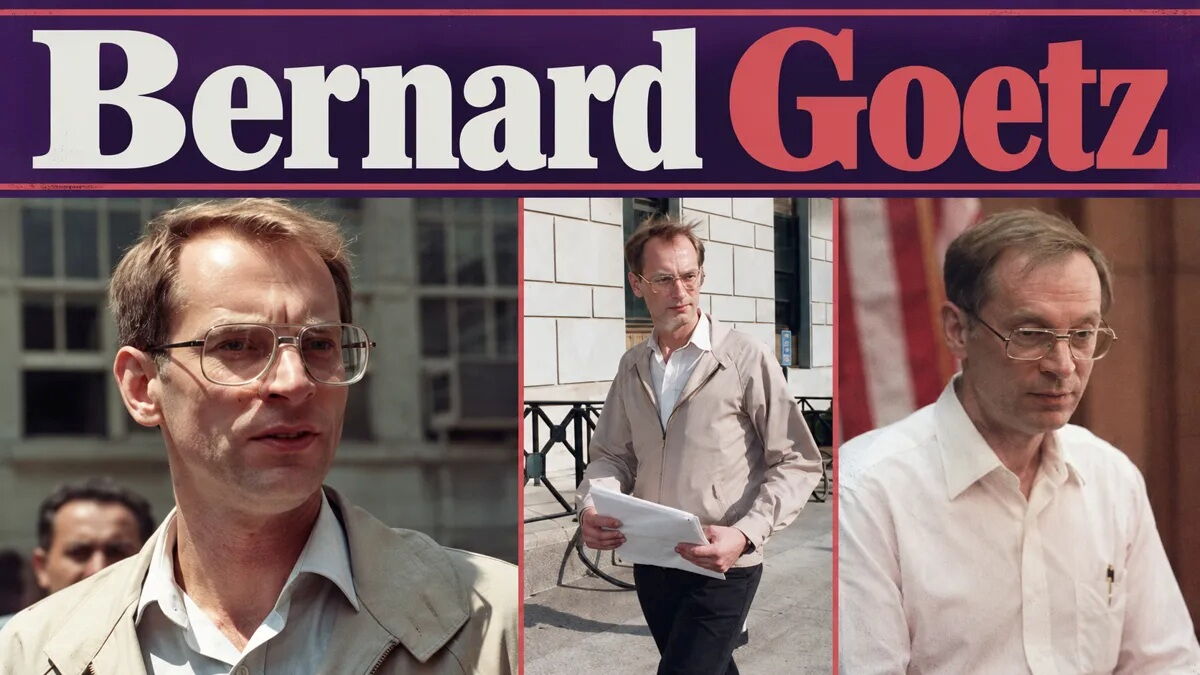
I think of Bernard Goetz as a live wire in American public debate. Bernhard Hugo Goetz, born in Kew Gardens, Queens, on November 7, 1947, became one of New York’s most contentious figures after the December 22, 1984 subway shooting. He represented terror, self-defense, and urban criminal irritation for some. He symbolized racial violence, vigilantism, and the deadly romance of private law enforcement for others.
In court, his name was never sealed. On TV, in newspapers, at dinner tables, and in political speeches. In a 1980s city plagued by crime, Goetz became more than an individual. Become a mirror. People saw in him what they feared or believed most.
The story of Bernard Goetz is not just the story of one shooting. It is also the story of family pressures, private eccentricities, inherited burdens, and a life that seemed to harden under the weight of its own mythology.
Early Life of Bernhard Hugo Goetz
I think Goetz’s childhood shaped him. His German-American immigrant family was disciplined, mobile, and stressful. Born in Queens in 1947, he spent his childhood in upstate New York, mainly around Rhinebeck, where his family ran a dairy farm and bookbinding business.
The youngest of four, he was. That detail counts. Early childhood is generally shaped by familial dynamics, which were challenging for Goetz. When his father was charged with child molesting in 1960, controversy shattered his family. The home suffered even though the defendant pleaded guilty to disorderly behavior. Goetz attended Swiss boarding school at 12.
He feels like his youth film was cut down by that move. One world ended, another began. He studied hard and technically in the US after moving away from home. New York University awarded him a bachelor’s degree in electrical and nuclear engineering in 1969 or 1970. Drifters didn’t go that way. The path of a system, precision, and control enthusiast.
The Goetz Family Background
If I step back and look at the family as a whole, I see an immigrant household built on work, reinvention, and quiet fracture. Bernard Goetz did not emerge from nowhere. He came from a family whose history carried both ambition and turbulence.
Family Snapshot
| Family Member | Relationship | Key Details |
|---|---|---|
| Bernhard Hugo Goetz | Bernard Goetz | Born November 7, 1947, Queens, New York |
| Bernhard Willard Goetz Sr. | Father | Born 1906, German immigrant, businessman |
| Gertrude Goetz, née Karlsberg | Mother | German immigrant, converted from Judaism to Lutheranism |
| Unnamed brother | Sibling | Older brother, part of family estate division |
| Two unnamed sisters | Siblings | Older sisters, part of family estate division |
German was the family’s heritage. His parents were immigrants, and religion defined the family. His mother Gertrude was Lutheran after being Jewish. Those features indicate a family shaped by migration, identity change, and Americanization through work and adaptation.
The siblings remained largely outside public view. Their names were not widely circulated, and that privacy is striking in a case that consumed public imagination. Even when Bernard Goetz became famous, the rest of the family mostly stayed behind a curtain.
His Father: Bernhard Willard Goetz Sr.
I can’t understand Bernard Goetz without considering his 1906-born father, Bernhard Willard Goetz Sr. In 1928, he moved to America and pursued business. He worked at the family dairy farm, bookbinding, and Florida real estate development. He appears to be a patriarch with multiple agendas.
His legacy is tarnished. His 1960 legal difficulties affected the family’s mood. The effects of public shame last in families. Silence, rage, defensiveness, and mistrust might result. For an adolescent boy, such moment might be a life-altering event.
Bernhard Sr. passed away in 1984, the year his son gained national fame. That timing is startling. Both father and son tales ended and began publicly practically simultaneously. Bernard Goetz inherited $140,000 or more from his father in the late 1980s after taxes and siblings’ divide. Not much riches, but it mattered in a life dominated by legal and civil financial implications.
His Mother: Gertrude Goetz
In 1977, Gertrude Karlsberg Goetz died. She’s quieter than her son’s stare. I consider her a family anchor. She was a German immigrant who converted from Judaism to Lutheranism, suggesting a life of adaptation, cultural negotiation, and sacrifice.
Mothers are often the hidden architecture in family stories. Though they rarely make news, they shape the air we breathe. Gertrude’s role fits that trend. Though her daily existence is less apparent, her role in the family’s immigrant and religious identity was crucial.
Education, Work, and Private Life
Before the train shooting, Goetz lived a restricted yet useful life. After NYU, he temporarily worked at his father’s Florida real estate firm. He launched a modest electronics calibration and repair business in his Greenwich Village apartment after returning to New York.
That work matches his technical, isolated, rigorous persona. He was no businessman or famous entrepreneur. A self-employed electronics specialist, he worked with instruments, measurements, and precise adjustments. He could prefer controlled systems over chaotic human unpredictability in a room full of wiring and tools.
His personal life was basically private. He divorced after a short marriage and had no children. Not one of his long-term relationships was public. He became known as a loner whose strongest bonds in later life revolved around his values, rituals, and animal care.
The 1984 Subway Shooting
Everything changed on December 22, 1984. On a New York City subway train, Goetz shot four Black teenagers whom he claimed were trying to mug him. The shooting electrified the city. It landed in a New York already tense with fears about subway crime, random violence, and social disorder.
The occurrence seems like a spark in a gas-filled chamber. The response was quick and massive. Supporters saw him as a guy driven to the edge when he was robbed in 1981 and started carrying an illegal pistol. Critics called the shooting racially motivated vigilantism, expressing personal anxiety and societal bias.
After the shooting, Goetz fled and later surrendered in New Hampshire. The legal process that followed stretched across 1985, 1986, and 1987. He was acquitted of the major charges but convicted on gun possession charges. He ultimately served about 8 months in prison.
The criminal verdict did not end the matter. In 1996, Darrell Cabey won a civil judgment of $43 million against Goetz, though much of it reportedly went uncollected. The legal story thus split in two: criminal acquittal on major counts, civil liability with staggering financial implications.
Politics, Animal Welfare, and Later Years
Goetz remained famous after the trial. He failed for NYC mayor in 2001. He ran for Public Advocate in 2005. He promoted vegetarian school meals and animal welfare. He astonished some train case acquaintances with those stances.
His public persona changed in later decades. He was known in Union Square as the “Squirrel Man” for feeding and rescuing squirrels. Unlike his earlier vision of steel and gunfire, this one seemed almost pastoral, a city man caring for small, frightened animals. It preserved the past but gave it a peculiar, human touch.
Goetz stays in New York in 2025 and 2026, being discussed for books, interviews, anniversaries, and vigilante-style controversies. He has rarely apologized for the 1984 shooting. He is known for his consistency in public life. Not through apology has he reinvented himself.
Why Bernard Goetz Still Matters
Bernard Goetz’s narrative combines American obsessions with crime, race, terror, masculinity, self-defense, and urban collapse, making it important. He appeared when New York City was regarded as decaying and dangerous. In such environment, he became a folk symbol, but not simple.
He also remains relevant because his case exposed how sharply public opinion can divide along emotional lines. One person sees a survivor. Another sees an aggressor. One sees civic failure. Another sees private brutality. The same facts move through different moral lenses and come out altered.
That is why his story keeps returning. It is not only about 1984. It is about the American habit of turning extreme individuals into arguments.
FAQ
Who is Bernard Goetz?
Bernard Goetz, born Bernhard Hugo Goetz on November 7, 1947, is an American electronics specialist best known for the December 22, 1984 New York City subway shooting in which he shot four teenagers and claimed they were trying to mug him.
Where was Bernard Goetz born?
He was born in Kew Gardens, Queens, New York, in 1947.
Who were Bernard Goetz’s parents?
His parents were Bernhard Willard Goetz Sr. and Gertrude Goetz, née Karlsberg. Both were German immigrants to the United States.
What is known about his mother, Gertrude Goetz?
Gertrude Goetz was a German immigrant who converted from Judaism to Lutheranism. She died in 1977 and remains a relatively private figure in the family story.
What is known about his father, Bernhard Willard Goetz Sr.?
Bernhard Willard Goetz Sr., born in 1906, immigrated to the United States in 1928. He ran several family businesses, including a dairy farm, a bookbinding operation, and later real estate ventures in Florida. His 1960 legal troubles had a major effect on the family.
Did Bernard Goetz have siblings?
Yes. He had three older siblings, one brother and two sisters. Their names were not widely publicized.
Was Bernard Goetz married?
He had a brief marriage that ended in divorce. No publicly documented children are associated with him.
What did Bernard Goetz do for work?
He worked primarily as a self-employed electronics technician, calibrating and repairing high-end equipment from his Greenwich Village apartment.
What happened on December 22, 1984?
On that date, Goetz shot four Black teenagers on a New York City subway train. He said they were attempting to rob him. The event triggered intense national debate over self-defense, race, and crime.
Was Bernard Goetz convicted?
He was acquitted of the major criminal charges related to the shooting but was convicted on gun possession charges. He served about 8 months in prison.
What happened in the civil case against him?
In 1996, Darrell Cabey won a civil judgment of $43 million against Goetz. Much of that judgment was reportedly never collected.
What has Bernard Goetz done in later life?
In later years, he became known for animal welfare efforts, especially feeding and rescuing squirrels in New York City. He also ran unsuccessfully for mayor in 2001 and for Public Advocate in 2005.