Basic Information
| Category | Details |
|---|---|
| Full name | Virginia Lamp Thomas |
| Known as | Ginny Thomas |
| Birthplace | Omaha, Nebraska |
| Family background | Republican household with strong conservative influence |
| Parents | Donald Lamp and Marjorie Lamp |
| Siblings | Russell Lamp, William Lamp, Joanne Elliott |
| Spouse | Clarence Thomas |
| Education | Mount Vernon College, Creighton University |
| Law degree | J.D. from Creighton University School of Law |
| Main career lanes | Lawyer, political activist, consultant, commentator |
| Notable organizations | Heritage Foundation, Liberty Central, Liberty Consulting, The Daily Caller |
| Faith | Converted to Catholicism in 2002 |
A Life Shaped by Politics
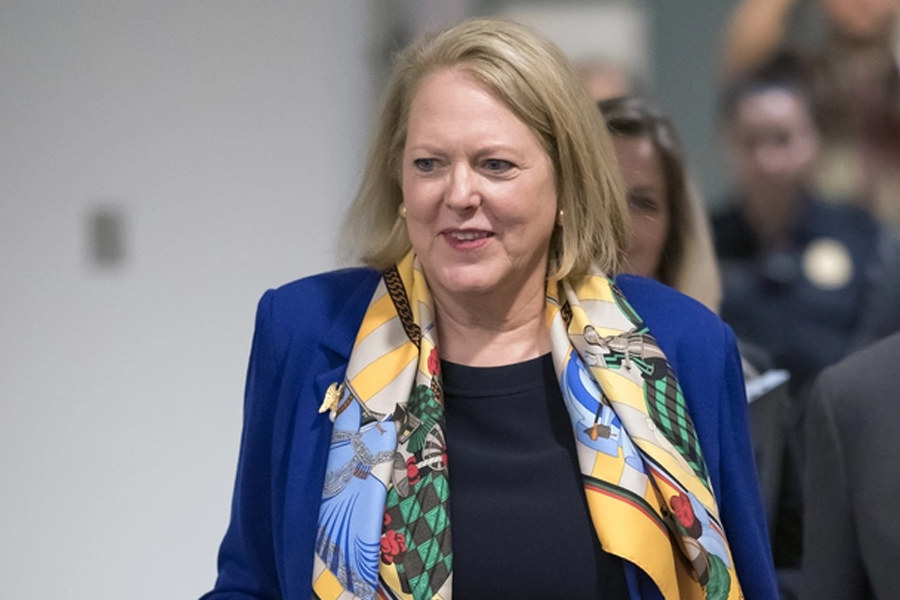
Ginny Thomas was never at the room’s edge. She established a life in the middle of the dispute through repetition. Born Virginia Lamp Thomas in Omaha, Nebraska, her family was politically active. Dinner-table weather. It was house air. It was part of the family’s rhythm before she became famous.
Her journey begins in the Midwest but moves on. She studied law, joined Republicans, and became a conservative activist. Always two major poles have defined her public character. Writing, organizing, lobbying, and advising are hers. The other is her marriage to Supreme Court Justice Clarence Thomas, which made her stand out more than other political spouses in America.
From Omaha Roots to National Politics
Ginny Thomas grew up in a family that leaned hard right. That mattered. Her childhood formed the roots of her political identity, and those roots ran deep. She attended Westside High School, then went to Mount Vernon College before transferring to Creighton University. At Creighton, she earned both her undergraduate degree and later a law degree.
That education gave her tools, but her drive gave those tools force. She wanted to enter politics, not simply observe it. Early in her career, she worked around Republican power structures and conservative institutions. She understood the machinery of influence. She did not merely admire it. She learned how it turned.
Her career path moved across several lanes. She worked for Republican Representative Hal Daub. She later held roles tied to policy and labor issues. She worked with the U.S. Chamber of Commerce. At the Department of Labor, she saw government from the inside. Later, at The Heritage Foundation, she served as a liaison between the think tank and the Bush administration. That role placed her inside the modern conservative ecosystem, where ideas, messaging, and policy often blur together like colors in wet paint.
Family Members and Personal Relationships
Clarence Thomas
Clarence Thomas is the most visible person in Ginny Thomas’s personal life. They married in 1987, and their marriage became a public institution of its own. It has been discussed, analyzed, defended, criticized, and dissected from almost every angle. But beyond the headlines, the relationship reflects a long partnership between two people who have shared faith, politics, and a highly unusual level of public scrutiny.
Their marriage is also part of why Ginny Thomas has remained in the public eye. She is not just a spouse standing at the side of a famous figure. She is an actor in her own right, with her own convictions, organization, and public footprint. The two are linked, but not interchangeable.
Jamal Adeen Thomas
Jamal Adeen Thomas is Clarence Thomas’s son from a previous marriage, which makes him Ginny Thomas’s stepson. He is an important part of the family story because he connects Clarence Thomas’s earlier life to the later household that Ginny helped shape.
In family terms, a stepson can sometimes remain in the shadows of public narratives. Here, he matters because he completes the family map. Ginny Thomas did not have children with Clarence Thomas, but the marriage still formed a blended family structure. That detail is often overlooked, yet it is central to understanding the private side of their household.
Mark Martin Jr.
Mark Martin Jr. is Clarence Thomas’s great-nephew, and he was raised in the Thomas household during part of his childhood. That makes him another important family figure in the orbit of Ginny Thomas. He was not her biological child, but family is often built by responsibility rather than blood alone.
This part of the story adds texture. It shows a home that was not just symbolic or ceremonial. It was a lived-in space where children were cared for and family boundaries were shaped by necessity, trust, and commitment. In that sense, the Thomas household looked less like a marble monument and more like a house with rooms that opened outward.
Donald Lamp
Donald Lamp was Ginny Thomas’s father. He was an engineer who owned his own firm, and he was politically conservative. His role in her life matters because it helps explain the environment that formed her. A child does not usually become a fierce activist by accident. The first drafts of belief are often written at home.
Donald Lamp helped shape a household where political identity was active, not passive. He stood at the beginning of the family tree that eventually reached one of the most scrutinized women in American conservatism.
Marjorie Lamp
Marjorie Lamp was Ginny Thomas’s mother. She was a conservative activist and a stay-at-home mother. She was politically committed and deeply engaged in the ideological life of the family. In many ways, she appears to have been the emotional and political anchor of the household.
Marjorie Lamp’s influence can be seen in the way Ginny Thomas speaks and acts publicly. The passing of conviction from one generation to another often works like a river under ice. You do not always see it, but you can feel the current. Marjorie Lamp helped create the current that carried her daughter into politics, law, and activism.
Russell Lamp, William Lamp, and Joanne Elliott
Ginny Thomas’s known siblings are Russell Lamp, William Lamp, and Joanne Elliott. They place her within a larger family structure, one where she was the youngest of four children. That detail matters because youngest children often grow up learning how to enter an already developed world. They listen first. They watch. Then they speak.
Her siblings help round out the family portrait. They remind us that even highly public people come from ordinary family arrangements with names, roles, and shared history.
Career, Influence, and Public Achievements
Ginny Thomas built a career at the intersection of law, advocacy, and media. That intersection became her stage. She founded Liberty Central in 2009, a Tea Party era nonprofit aimed at activist coordination and political influence. She later launched Liberty Consulting in 2010. She also worked as a special correspondent for The Daily Caller and served in advisory roles for other conservative groups.
Her work achievements are not best measured by trophies or titles. They are measured by reach. She became a node in a wider network of conservative donors, activists, and policy players. That kind of influence is not always loud. Sometimes it moves like groundwater, changing the shape of the field beneath it.
Her name became even more widely known during the aftermath of the 2020 election. Reports connected her to efforts urging political actors to challenge or reverse election outcomes. That period turned her from a conservative activist into a national controversy. She was no longer only a participant in political life. She had become one of its symbols.
Net Worth and Public Standing
Her net worth has been estimated at around $1 million, though public estimates vary and should be treated carefully. Wealth figures for private individuals are often foggy, especially when tied to spouses, consulting work, and nonprofit roles. Still, the general picture is clear enough. Ginny Thomas is not presented publicly as an elite mogul, but as a politically connected professional whose career has moved through institutions of influence rather than wealth accumulation alone.
Faith, Identity, and the Personal Side
Ginny Thomas’ 2002 Catholic conversion is among her most interesting facts. This transformation implies her life has been more than ideological. It was spiritual too. Public people are frequently seen as fixed, yet real lives are more weather than stone. They move. They deepen. They turn.
Her faith and marriage are linked in the public mind, especially since Clarence Thomas is a historical person. Their marriage has been widely publicized, criticized, and scrutinized. However, personal details matter. They depict a lady whose identity transcends scandal, campaign, and controversy.
Extended Timeline
Early life and education
I trace Ginny Thomas’s early life to Omaha, where family politics shaped her first impressions. She attended Westside High School, then moved into higher education at Mount Vernon College and Creighton University. There she built the academic foundation for law and political work.
First career steps
In the early years of her professional life, she worked for Republican offices and policy organizations. These early jobs helped her understand both electoral politics and the conservative movement’s internal language.
1987 to the early 2000s
Her marriage to Clarence Thomas in 1987 placed her inside a national story that would keep growing for decades. In 1991, she worked in the Department of Labor during Clarence Thomas’s Supreme Court confirmation period. By 2000, she had joined The Heritage Foundation. In 2002, she converted to Catholicism.
2009 to 2011
In 2009, she founded Liberty Central. In 2010, she founded Liberty Consulting. In 2011, she became a correspondent for The Daily Caller. These years marked her emergence as an independent public voice.
2016 to 2020
By 2016, she was publicly active in Republican politics. By 2020, her role in the conservative movement had become more controversial and more visible. Her political email trail, network connections, and advocacy brought new attention.
2022 to the present
The 2022 period brought intense national scrutiny, especially around the Jan. 6 investigation. Since then, her public identity has remained tied to debates over ethics, judicial recusal, election denial, and the power of activist spouses in American politics. She remains a figure who draws attention wherever law and politics collide.
FAQ
Who is Ginny Thomas?
Ginny Thomas is a conservative activist, lawyer, consultant, and political commentator best known for her own political work and for being married to Supreme Court Justice Clarence Thomas.
What is Ginny Thomas’s full name?
Her full name is Virginia Lamp Thomas.
Who are Ginny Thomas’s parents?
Her parents are Donald Lamp and Marjorie Lamp.
Does Ginny Thomas have children?
She does not have children with Clarence Thomas. Clarence Thomas has one son, Jamal Adeen Thomas, who is Ginny Thomas’s stepson.
What is Ginny Thomas known for professionally?
She is known for legal training, conservative activism, nonprofit leadership, consulting work, and her role in Republican political circles.
What organizations is Ginny Thomas associated with?
She has been associated with the Heritage Foundation, Liberty Central, Liberty Consulting, The Daily Caller, and other conservative networks.
What is Ginny Thomas’s estimated net worth?
Public estimates place her net worth at about $1 million, though the number is not exact and should be treated as approximate.
Why is Ginny Thomas often in the news?
She often appears in the news because of her activism, her political contacts, and the public scrutiny surrounding her marriage and her role in post election controversies.