Basic Information
| Field | Details |
|---|---|
| Full Name | Henry O Neill |
| Birth Date | August 10, 1891 |
| Birth Place | Orange, New Jersey, United States |
| Death Date | May 18, 1961 |
| Death Place | Hollywood, California, United States |
| Occupation | Stage and screen actor |
| Known For | Authority roles such as judges, lawyers, officers, executives, and fathers |
| Spouse | Anna Barry |
| Child | One child |
| Active Years | Stage work from the 1910s onward, film work from 1930 |
A Character Actor with a Solid Presence
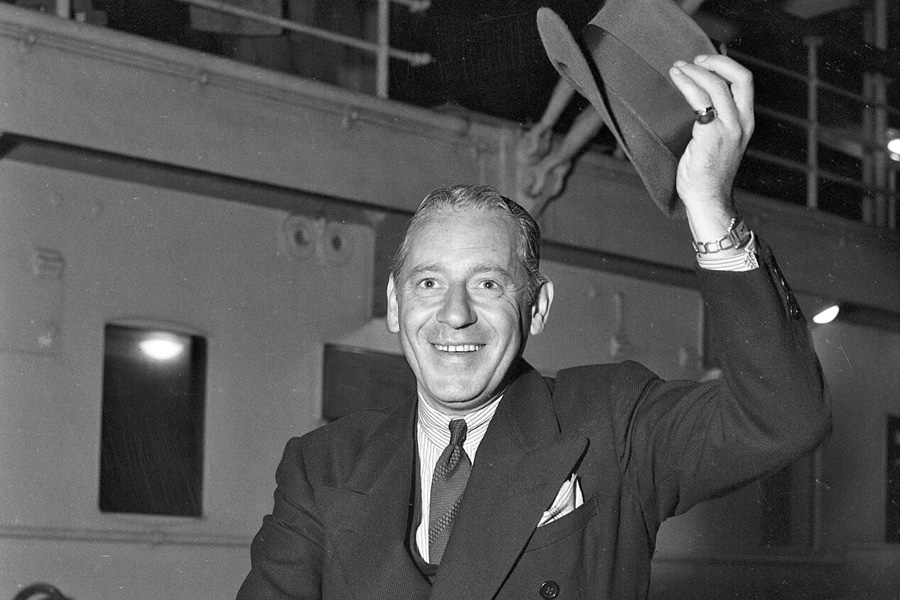
I think Henry O’Neill was one of those entertainers who were remembered without shouting. Building a career like a stone bridge, one sturdy brick at a time. The 1891 Orange, New Jersey native progressed through American theater and film with a quiet authority that made him a natural match for serious roles. He was not a flashy actor. This actor made a room feel orderly when he entered.
His work is connected with respected, practical folks. He represents offices, courts, military sites, houses, and institutions. He often played those who steady the frame while others make noise. Such presence matters. Provides film spine.
He became famous onstage before Hollywood. He began acting young, served in WWI, and returned in 1919. A sequence alone tells me about his life. He knew interruption. Knows reinvention. He could start over without drama.
Early Life and Theatrical Foundations
Henry O Neill began life in New Jersey and entered the performing world through theater rather than film. That matters, because stage actors often learn discipline the hard way. They learn timing, stillness, projection, and the art of holding attention without cutting the air into pieces. O Neill carried that foundation into his screen work.
He spent years on Broadway and accumulated a strong stage record before Hollywood became his main arena. One of his major early theatrical associations was with The Hairy Ape, where he played Paddy. That role helped establish him as a serious dramatic actor. I find that especially telling because the stage can be unforgiving. It does not hand out credibility lightly. If the theater accepted him, that says plenty.
By the time he made his film transition, he already had the posture of a veteran. He was not learning how to act. He was translating a skill set into a new medium. That kind of move often produces actors who seem older than their years in the best possible way. They do not perform like beginners. They perform like men who have already seen the machinery of life.
Film Career and Screen Identity
Henry O Neill entered film in 1930, first through a short with Spencer Tracy, then in feature films beginning in 1933. Once he settled into the industry, he became a dependable supporting actor across a long stretch of Hollywood production. His screen career became a gallery of authority. Judges. Lawyers. Officers. Fathers. Businessmen. Men who issue decisions or absorb them.
I think that typecasting was both limiting and useful. It narrowed him, but it also made him instantly legible to audiences. He was one of the faces viewers could trust to represent order, gravity, and social structure. That is not a minor achievement. In classic Hollywood, the supporting cast often made the world believable. Henry O Neill helped make that world feel inhabited.
His filmography includes titles such as Lady Killer, The Man with Two Faces, The Story of Louis Pasteur, Santa Fe Trail, Men of Boys Town, Tortilla Flat, Anchors Aweigh, The Green Years, and The Wings of Eagles. These are not random appearances. They show a long working life inside a system that rewarded consistency and professionalism. He stayed busy for decades. He became, in effect, part of the architecture of American cinema.
He also worked with major studios, including Warner Bros. in the 1930s and MGM in the 1940s. That suggests durability. Studios did not keep actors around unless they could do the job cleanly, on time, and with very little friction. O Neill seems to have had that rare blend of skill and reliability. In a business full of fireworks, he was a lantern.
Family and Personal Relationships
Henry O Neill’s family life appears more private than his screen life, but the known details are clear and important.
His spouse was Anna Barry. They married in 1924, and the marriage lasted until his death in 1961. That is a long span, nearly four decades, and it places Anna Barry at the center of his adult personal life. I read that relationship as a stabilizing force. Behind the public rhythm of stage calls, studio schedules, and character parts, there was a home life that endured.
The couple had one child. Publicly available details do not clearly identify the child’s name in the material I reviewed, so I cannot responsibly invent more than that. Still, even that single fact matters. It tells me Henry O Neill was not only a screen presence but also a husband and father.
I also find it notable that he was not related to playwright Eugene O Neill, even though Henry O Neill performed in Eugene O Neill’s work and became associated with that dramatic universe. That is the sort of coincidence that can confuse history, but the distinction is useful. It separates family fact from artistic connection. His bond to the O Neill name was theatrical, not familial.
Personal Life and Character
Henry O’Neill was shaped by service, stagecraft, and endurance. He was in WWI. He resumed acting. From theater to film, he maintained that performance was a craft, not a stance. Character performers with this mentality are typically strong. People don’t sell themselves first. Scenes are sold.
From the stage-centered early 1900s to the studio-driven picture decades, he witnessed entertainment change. Some actors can’t cross those worlds. He did. His career feels like a lengthy, calculated river rather than a rapid famous boom. Movement continued. It continued to carve.
Besides acting, he was a Hollywood Walk of Famer and Screen Actors Guild board member. Honors indicate professional esteem. He was hired and more. He was valued.
Career Achievements and Legacy
Henry O Neill’s greatest achievement may be the sheer consistency of his work. He appeared in more than 150 films. That number is itself a kind of monument. It means directors trusted him, studios relied on him, and audiences repeatedly accepted him as part of the narrative landscape.
His legacy is not built on headlines or scandal. It is built on repeat excellence. He played men who held their shoulders square. He made authority look human. He gave shape to the kinds of roles that often go unnoticed until they are missing. In that sense, his career is like the beam inside a house. People may not admire it directly, but they would notice immediately if it were gone.
He died in Hollywood in 1961 and was buried at San Fernando Mission Cemetery. Even his final resting place keeps him tied to the geography of American entertainment. The arc of his life runs from New Jersey to Broadway to Hollywood, with wartime service and family life folded in between. It is a plain story on the surface, but it has depth under the grain.
FAQ
Who was Henry O Neill?
Henry O Neill was an American stage and screen actor known for playing authoritative, dependable, and often distinguished men in films and on Broadway.
Who was Henry O Neill married to?
He was married to Anna Barry. Their marriage began in 1924 and lasted until his death in 1961.
Did Henry O Neill have children?
Yes, he had one child.
What kinds of roles did Henry O Neill usually play?
He was often cast as judges, lawyers, officers, executives, fathers, and other figures of authority.
Was Henry O Neill related to Eugene O Neill?
No, he was not related to Eugene O Neill, though he did perform in plays connected to Eugene O Neill’s dramatic world.
What made Henry O Neill notable in Hollywood?
He appeared in more than 150 films, earned a Hollywood Walk of Fame star, and built a reputation as a reliable character actor with a strong stage background.