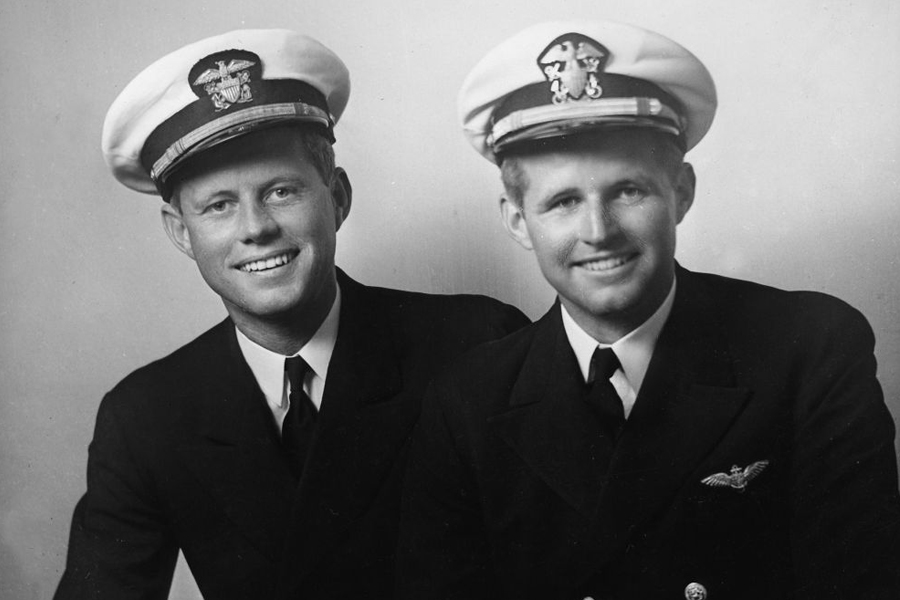
A Firstborn Shaped for Greatness
Joseph P. Kennedy Jr. had a life of anticipation from the start. Born July 25, 1915, in Hull, Massachusetts, he was the first child of Joseph P. Kennedy Sr. and Rose Fitzgerald Kennedy, a noteworthy fact. In the renowned American dynasty, Joe Jr. was the pioneer. He was the oldest of nine children, the first in line, and many felt would take the family name to the White House.
His parents raised their kids seriously. They constructed them with discipline, faith, competitiveness, and desire. Joe Jr. was raised to strive and lead in a tough environment. Politics hung over his destiny like a star. His father, a renowned businessman and diplomat, envisaged a president in him. His mother, passionately Catholic and family-oriented, saw a boy with remarkable responsibility and purpose.
Even as a child, Joe Jr. seems to have carried himself with that knowledge. He was athletic, energetic, and popular, but also serious in the way firstborn children often become serious. He was not just another Kennedy child. He was the Kennedy child on whom the first great hopes rested.
Education, Discipline, and Political Promise
Joe Jr.’s education matched his destiny. Dexter School and Choate helped him intellectually and socially. The family fostered confidence, discipline, competition, and composure, which the schools honed. His stay at the London School of Economics was significant for a young man preparing for public life.
He stood out at Harvard. He graduated magna laude in 1938, proving his polished heir image was matched with competence. He temporarily attended Harvard Law School, which matched his political career plan. He was a 1940 Democratic National Convention delegate, proving politics was a reality for him.
That early period of his life strikes me as a blueprint in action. The whole thing points ahead. His schooling, family position, public appearance, and father’s objectives seem to align. Joe Jr. did not appear to be gaining prominence. He was targeted.
The Kennedy Household and the Weight of Family
I must situate Joe Jr. in the Kennedy family machinery to comprehend him. Not a peaceful or regular residence. Constant motion, high standards, individual loyalties, and continuous comparison characterized it. The kids were taught to compete, excel, and be loyal. Religion and civic duty dominated. So was winning.
Joe Jr. was the oldest sibling and had a particular position. Early on, he protected his younger siblings. Many large families revolve on the oldest kid, and that seems to be the case here. He established the tone. He has older-brother gravity.
Sibling relationships were important to him. The youngest brother closest in age and fate was John F. Kennedy, born in 1917. Both had childhood adventures, pranks, and competition. Their relationship was competitive but kind. It had the heat of two brilliant brothers reared in the same furnace. As the eldest, Joe Jr. was supposed to lead in politics. John was talented but originally a supporting character. Only Joe Jr.’s death disrupted that order.
Another key sibling link was Kathleen “Kick” Kennedy, later Kathleen Cavendish. She was vibrant and cherished, reflecting the Kennedy flame. After her 1941 lobotomy and hospitalization, Rosemary Kennedy, the eldest daughter, was more sad. Although Joe Jr. had already joined the military, the tragedy contributed to the family’s emotional climate. Younger siblings, such as Eunice Kennedy Shriver, Patricia Kennedy Lawford, Robert F. Kennedy, Jean Kennedy Smith, and Edward “Ted” Kennedy, grew up in the environment Joe Jr. created as the firstborn son.
Joseph P. Kennedy Sr. and Rose Fitzgerald Kennedy
Joe Jr.’s parents were towering influences, and their relationship with him shaped the entire arc of his life.
Joseph P. Kennedy Sr. had a huge ambition. Business and investment brought him fortune, and he pursued prestige equally. He moved at the highest levels of public life as U.S. Ambassador to the UK. For him, Joe Jr. was more than just a son. He carried a family project. The father poured his national power fantasies into the eldest son from an early age. Joe Sr. sincerely believed that Joe Jr. would become president.
Rose Fitzgerald Kennedy had a separate but profound effect. She had strong Catholic beliefs, morality, and family hierarchy. Joe Jr., her firstborn, occupied a particular place in her heart. She saw his duty and family responsibilities. Mother strengthened moral scaffolding while father provided political architecture.
Together, they created a home where Joe Jr. became both son and symbol.
Military Service and the Test of War
Like many men his age, the Second World War affected Joe Jr.’s life. He left Harvard Law School for America. Naval in 1941. He became a naval aviator and left the well planned political career for a more perilous one.
No ceremony marked his service. After anti-submarine patrols in the Caribbean, he flew PB4Y Liberators from England. Real combat duties required precision, endurance, and nerve. He accomplished several missions and fulfilled his commitments. But he did more. He volunteered for perilous tasks beyond his duties.
That detail counts. It seems responsibility was more than a familial term to him. It was personal. Despite his long service, he flew missions around D-Day in 1944. He was a rising political figure from a wealthy and distinguished family, yet in uniform he seemed to focus on action, not lineage.
I think that is one reason his story remains compelling. The life of privilege is obvious. So is the burden of expectation. But war stripped those things down to essentials. In the cockpit, inheritance had little value. Skill, courage, and resolve mattered more.
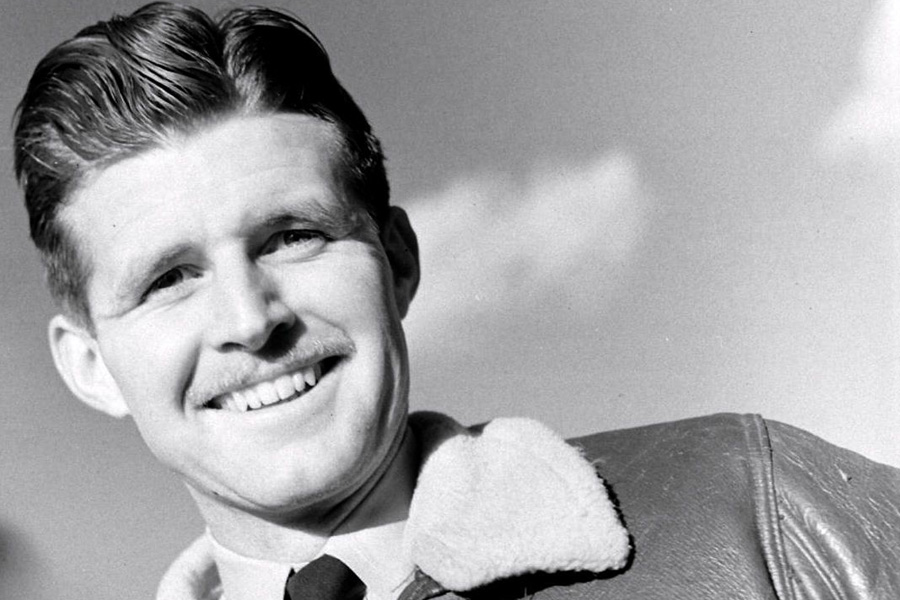
Operation Aphrodite and a Death at 29
On August 12, 1944, Joe Jr. participated in Operation Aphrodite, a very risky mission during the war. Explosive-filled airplanes were early remote-guided weapons. The idea was rash and hazardous. Pilots would take off bomb-laden planes, arm the explosives, and bail off before guiding them toward a target.
Joe Jr. volunteered for this mission.
His aircraft exploded prematurely over Blythburgh in East Suffolk, England, before he and his copilot could escape. He was 29 years old. The death was sudden, violent, and wrapped in wartime secrecy. A future imagined for nearly three decades ended in a flash in the sky.
The Kennedys suffered a huge loss. The loss of a cherished son and sibling was not all. Failure of a political plot shaped the family’s internal order. After Joe Jr.’s death, expectations turned to John F. Kennedy. As much as Joe Jr.’s presence shaped American history, his absence did too.
Legacy, Honors, and the Family Aftermath
After his death, Joe Jr. was awarded the Navy Cross, Distinguished Flying Cross, Air Medal, and Purple Heart. These honors honored bravery, sacrifice, and service. His name was also on the USS Joseph P. Kennedy Jr. (DD-850), a museum destroyer.
Parents founded Joseph P. Kennedy Jr.Foundation, which supported intellectually disabled people. In light of Rosemary Kennedy’s life and Eunice Kennedy Shriver’s activism, that legacy received importance.
The emotional repercussions affected the whole family. John inherited potential and the shadow of a predestined elder brother. Robert and Ted’s family was forever changed by tragedy. The family suffered further tragedy when Kathleen died in a 1948 aircraft disaster. Rose and Joe Sr. endured the wound for life.
Joe Jr. remained, in memory, the golden son. Not because he was flawless, but because he represented possibility in its brightest form. He was the eldest brother, the political heir, the young officer, the handsome favorite, and the unfinished story.
Key Family Members at a Glance
| Family Member | Relationship to Joseph P Kennedy Jr. | Notable Connection |
|---|---|---|
| Joseph P. Kennedy Sr. | Father | Groomed him for national political leadership |
| Rose Fitzgerald Kennedy | Mother | Emphasized duty, faith, and family role |
| John F. Kennedy | Younger brother | Close, competitive bond; later inherited family political hopes |
| Kathleen “Kick” Cavendish | Younger sister | Warm sibling relationship; another charismatic family figure |
| Rosemary Kennedy | Younger sister | Her later institutionalization shaped family history |
| Eunice Kennedy Shriver | Younger sister | Later became a major advocate for people with intellectual disabilities |
| Robert F. Kennedy | Younger brother | Grew up under the legacy Joe Jr. left behind |
| Edward “Ted” Kennedy | Younger brother | Part of the youngest generation shaped by the family’s losses |
Why Joseph P Kennedy Jr Still Fascinates
Joe Jr. continues to fascinate because he stands at the crossroads of myth and history. He was not president, senator, or cabinet official. He never had the chance. Yet his life feels central to the Kennedy story because so much future meaning was once attached to him.
He represents the untaken path in American politics. People wonder what would have happened if he lived, but history is locked. Would he have entered politics first? Would John have stayed undercover? Would the Kennedy dynasty have changed? The questions persist because Joe Jr. appeared to be suited for a large stage at the time.
Using privilege and sacrifice, he intrigues. He died in military duty before inheriting political power despite his riches, connections, and notoriety. Like a light caught in a powerful wind, his existence was brilliant, meaningful, and short.
FAQ
Who was Joseph P Kennedy Jr?
Lieutenant Joseph P. Kennedy Jr. was an American navy aviator. Navy and eldest son of Joseph P. Kennedy Sr. and Rose Fitzgerald Kennedy. The Kennedy family’s political heir, born in 1915, was anticipated to run for president, especially by his father.
He was John F. Kennedy’s older brother. The two were close in age, shared a competitive but affectionate relationship, and grew up in the same intensely ambitious family culture. After Joe Jr. died in 1944, many of the family’s political hopes shifted toward John.
What did Joseph P Kennedy Jr do in World War II?
He served as a naval aviator in the U.S. Navy. He flew patrol bomber missions, including anti-submarine operations in the Caribbean and later combat-related missions from England in PB4Y Liberators. He also volunteered for dangerous assignments beyond his required service.
How did Joseph P Kennedy Jr die?
He died on August 12, 1944, during Operation Aphrodite, a secret mission involving explosive-filled aircraft intended to be used as early guided weapons. His plane exploded prematurely over Blythburgh, East Suffolk, England, before he could escape.
What honors did Joseph P Kennedy Jr receive?
He was awarded the Navy Cross, Distinguished Flying Cross, Air Medal, and Purple Heart after his death. These honors reflected his bravery and military service during World War II.
Who were Joseph P Kennedy Jr’s parents?
His parents were Joseph P. Kennedy Sr. and Rose Fitzgerald Kennedy. His father was a wealthy businessman and diplomat, and his mother was a devout Catholic matriarch who played a central role in shaping the family’s values and discipline.
Did Joseph P Kennedy Jr have a wife or children?
No. He never married and had no children. Although he had romantic interests, his adult years were largely centered on military service and the political future many expected him to pursue after the war.
Why is Joseph P Kennedy Jr important in Kennedy family history?
He is important because he was the first son on whom the family’s political ambitions were focused. His death transformed the family’s future, redirecting those expectations toward John F. Kennedy and reshaping the path of the Kennedy dynasty.