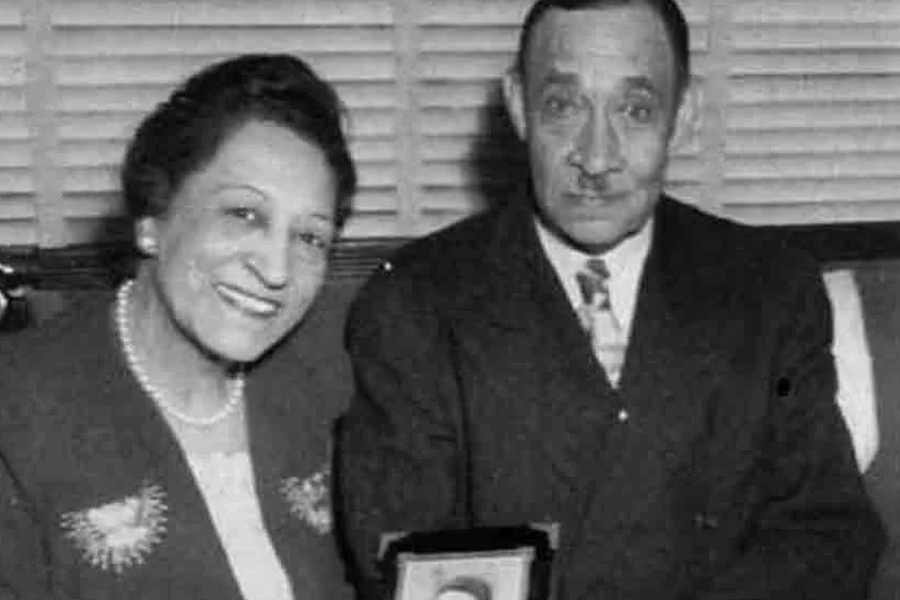
Norma Arica Marshall, born Norma Arica Williams on August 13, 1885, in Baltimore, Maryland, rarely made headlines. She had a huge impact outside the classroom and home. She was an educator, wife, mother, and quiet architect of the ideals that created her son Thurgood Marshall, the first African American Supreme Court justice.
Fame and wealth don’t stand out in Norma’s story. She constructed a solid foundation. Her Black Baltimore family valued education, independence, discipline, and self-respect during a time when segregation limited chances everyplace. She taught elementary and kindergarten in Baltimore’s public schools for over 25 years while raising two boys who became doctors and lawyers.
Basic Information
| Detail | Information |
|---|---|
| Full name | Norma Arica Marshall |
| Maiden name | Norma Arica Williams |
| Born | August 13, 1885 |
| Birthplace | Baltimore, Maryland |
| Died | August 15, 1961 |
| Age at death | 76 |
| Deathplace | New York City, New York |
| Husband | William Canfield Marshall |
| Marriage | Approximately April 17, 1905 |
| Children | William Aubrey Marshall and Thurgood Marshall |
| Occupation | Elementary and kindergarten teacher |
| Burial | Ferncliff Cemetery and Mausoleum, Hartsdale, New York |
Norma died only two days after her 76th birthday. She was buried at Ferncliff Cemetery and Mausoleum in Hartsdale, Westchester County, New York.
Norma Arica Marshall’s Early Family Life
Norma was one of the children of Isaiah Olive Branch Williams and Mary Ellen Fossett Williams. Her family was part of Baltimore’s established Black middle class, with connections to small business, education, military service, and community activism.
Her father, Isaiah, was born on December 7, 1838, in Maryland. During the Civil War era and its aftermath, he served in the United States Navy. From 1861 to 1865, he worked as a captain’s steward aboard the USS Santiago de Cuba, and from 1866 to 1869 he served as a cabin steward aboard the USS Powhatan.
After his naval service, Isaiah established himself in Baltimore’s business community. He worked as a baker and eventually operated a successful grocery store. His store became part of the family’s economic foundation, while his community activities reflected the family’s determination to challenge discrimination and mistreatment.
Norma’s mother, Mary Ellen Fossett Williams, was a homemaker who placed considerable importance on her daughter’s education. After Isaiah died on March 21, 1894, Mary became the head of the household. The family appeared in Baltimore census records at addresses including West Biddle Street.
Mary’s insistence that Norma complete her education became an important thread in the family’s later story. Education was not treated as a luxury. It was a form of independence.
Norma’s Siblings and Family Network
Norma grew up among several siblings. Her brothers and sisters included Avonia D. Williams, Avon Nyanza Williams, Denmeadia Marketa Williams Dodson, Fearless Mentor Williams, and Ravine S. Williams.
The Williams household reflected a broader pattern found among many successful Black Baltimore families of the period. Grocery businesses, skilled employment, teaching, and military service provided routes toward stability in a society structured by racial inequality.
The unusual names found throughout Norma’s family also give the family tree a distinctive character. Denmeadia, Fearless Mentor, Ravine, and Avon Nyanza were not ordinary names, and they suggest a household where individuality and aspiration were encouraged.
Marriage to William Canfield Marshall
Norma married William Canfield Marshall around April 17, 1905, in Baltimore. Norma was approximately 19 or 20, while William was about 23.
Their relationship had roots in childhood and neighborhood life. The two had attended school together, while their families operated competing grocery stores. What could have been a source of rivalry did not prevent Norma and William from building a marriage.
William was born on March 19, 1882. He worked as a railroad dining car waiter and porter and later became a head steward at a country club serving white clientele, including work associated with Gibson Island.
William’s employment placed him in environments shaped by racial hierarchy, but he was not known within his family as someone who accepted disrespect quietly. He emphasized dignity, argument, and self confidence. He also encouraged his sons to observe court proceedings and participate in discussions about current events, government, and the Constitution.
The marriage lasted more than four decades. William died on February 25, 1948, in Baltimore, leaving Norma a widow for the final years of her life.
A Mother Who Put Education First
Norma’s greatest influence can be seen through her children.
Her older son, William Aubrey Marshall, was born on September 15, 1905, only months after Norma’s marriage. He eventually became a physician and practiced in Delaware and earlier in Baltimore.
Her younger son was born on July 2, 1908, with the name Thoroughgood Marshall. The boy later shortened his first name to Thurgood, and the world came to know him as Thurgood Marshall.
Norma expected both sons to pursue serious professional lives. Her own experience as a teacher made education a natural centerpiece of the household.
The family home was filled with reading, discussion, and debate. William brought an argumentative spirit to family conversations, while Norma reinforced discipline, academic achievement, and perseverance. Together, they created an environment where the boys were expected to think for themselves.
The Sacrifice Norma Made for Thurgood Marshall
A highlight of Norma’s life was her son’s legal education.
Thurgood Marshall was denied entrance to Maryland Law School because of his race. He started law school at Howard University instead of letting rejection define him.
The family paid a lot for the schooling. Norma was said to have sold her wedding and engagement jewelry for his education.
Her gesture expresses her personality. The rings symbolized her marriage and wealth, while education represented opportunity. She choose the latter.
Thurgood became a leading civil rights lawyer. As the NAACP’s lead counsel in Brown v. Board of Education, he challenged racial segregation in court.
President Lyndon B. Johnson named him Supreme Court justice in 1967. Thurgood Marshall, the first African American on the Supreme Court, served until 1991.
He had an exceptional career because his mother taught, supported, and helped him get an education.
William Aubrey Marshall and His Medical Career
Norma’s older son, William Aubrey Marshall, followed a different professional path.
Aubrey became a physician and developed a respected medical career. His work exposed him to difficult conditions, and in the mid 1930s he contracted tuberculosis.
His illness became a major family concern. Treatment eventually required surgery at Bellevue Hospital in New York, including the removal of one lung and part of the other. Family members, including Norma and Thurgood, helped support him during this difficult period.
Aubrey’s experience also illustrates the close relationship among the Marshall family members. Their achievements were individual, but their lives remained interconnected.
Norma was not simply the mother of a future Supreme Court justice. She was also the mother of a doctor whose career and illness required substantial family support.
Thurgood Marshall and His Immediate Family
Thurgood Marshall married Vivian “Buster” Burey in 1929. Their marriage lasted until her death in 1955.
Later in 1955, Thurgood married Cecilia “Cissy” Suyat. Their family included two sons, Thurgood Marshall Jr. and John W. Marshall.
Thurgood Marshall Jr. became a lawyer and political aide. John W. Marshall later served as Director of the United States Marshals Service and held a senior public safety position in Virginia.
This means Norma’s influence continued into another generation. Her family tree eventually included lawyers, public officials, and other descendants who carried the Marshall name into professional and civic life.
Norma’s Career as an Educator
Norma spent more than 25 years teaching in Baltimore’s segregated public school system. She worked with elementary-age children, including kindergarten students.
Teaching in that period required patience and resilience. Black educators often worked within institutions that themselves reflected racial inequality, yet their classrooms could become places where children encountered discipline, intellectual confidence, and possibility.
Norma’s professional life was therefore closely connected to her family philosophy. She taught children during the day and reinforced the same values at home.
Hard work mattered. Education mattered. Character mattered. Most importantly, racial discrimination did not determine a person’s worth.
Some accounts have associated Norma with teacher training in New York, including a claim that she was among the early Black graduates of Columbia Teachers College. That detail is not as consistently established as other elements of her biography, but it fits the larger picture of a woman who placed professional education at the center of her life.
Norma Marshall’s Financial Circumstances
There is no reliable detailed figure for Norma’s personal net worth.
Her economic position is better understood through her profession and family circumstances. As a public-school teacher during the first half of the 20th century, she earned a modest professional income. William’s railroad and steward positions provided another source of household support.
The family appears to have maintained a middle-class lifestyle by the standards of Black Baltimore at the time. They experienced financial pressure, particularly during periods such as Aubrey’s illness, but education and professional advancement remained priorities.
Norma did not become wealthy through public celebrity. Her lasting wealth was cultural and familial. She helped create an environment in which her sons could turn education into professional opportunity.
Norma’s Final Years and Death
After William died in 1948, Norma lived for approximately another 13 years.
By then, Thurgood Marshall had already established himself as one of the country’s leading civil rights attorneys. His national reputation continued to grow before his appointment to the Supreme Court in 1967.
Norma did not live to see that historic appointment. She died on August 15, 1961, in New York City, two days after her 76th birthday.
Her burial at Ferncliff Cemetery and Mausoleum placed her among the many people whose personal stories became inseparable from the larger histories of their families.
Norma Arica Marshall’s Family Legacy
The fact that Norma developed her legacy without the usual historical visibility makes her narrative extra interesting.
She taught kids. She has boys. She supported her husband’s hard employment in a racially divided society. She gave up possessions for her son’s schooling. Her household promoted discussion and intellectual independence, thus she had high expectations.
Her family connected generations.
Isaiah Williams was part of a military and entrepreneurial age that gained independence. That legacy continued in schooling with Norma. William Canfield Marshall injected dignity and discussion. Aubrey became a doctor. Thurgood was a Supreme Court justice and civil rights pioneer. Later generations maintained professional and public service.
Thus, one famous son cannot summarize the family story. Norma Arica Marshall was instrumental in that tale.
Frequently Asked Questions
Who was Norma Arica Marshall?
Norma Arica Marshall was an American educator and the mother of Supreme Court Justice Thurgood Marshall. Born Norma Arica Williams on August 13, 1885, she spent more than 25 years teaching in Baltimore’s public schools.
When did Norma Arica Marshall marry William Canfield Marshall?
Norma married William Canfield Marshall around April 17, 1905, in Baltimore, Maryland. They had known one another from school, and their families operated competing grocery stores in the same neighborhood.
How many children did Norma Arica Marshall have?
Norma and William Canfield Marshall had two sons, William Aubrey Marshall and Thurgood Marshall. Aubrey became a physician, while Thurgood became a civil rights lawyer and the first African American U.S. Supreme Court justice.
What did Norma Marshall do for a living?
Norma was an elementary school teacher, including work with kindergarten students, in Baltimore’s segregated public school system. She taught for more than 25 years.
Did Norma Marshall help pay for Thurgood Marshall’s education?
Yes. After Thurgood was denied admission to the University of Maryland School of Law because of his race, he attended Howard University School of Law. Norma helped pay his tuition by pawning her wedding and engagement rings.
Who were Norma Marshall’s parents?
Her parents were Isaiah Olive Branch Williams and Mary Ellen Fossett Williams. Isaiah served in the U.S. Navy before becoming a baker and grocery-store owner in Baltimore.
When did William Canfield Marshall die?
William Canfield Marshall died on February 25, 1948, in Baltimore. Norma survived him by approximately 13 years.
When did Norma Arica Marshall die?
Norma died on August 15, 1961, in New York City, two days after her 76th birthday.
Where is Norma Arica Marshall buried?
Norma is buried at Ferncliff Cemetery and Mausoleum in Hartsdale, Westchester County, New York.
What is Norma Marshall best remembered for?
Norma is best remembered as a dedicated Baltimore educator and as the mother whose values and sacrifices helped shape Thurgood Marshall. Her emphasis on education, discipline, dignity, and perseverance became an important part of the family legacy.